
Utah Court Docket Search and Records Access
Utah court docket records are public documents that trace the history of cases filed in state courts. Anyone can search a Utah court docket to find case numbers, party names, hearing dates, and filing history. These records cover civil disputes, criminal charges, traffic matters, and small claims cases filed in district and justice courts across all 29 counties. This guide covers the tools and procedures available to search and obtain Utah court docket records, whether online, in person, or through the state archives.
Utah Court Docket Quick Facts
Utah Court Docket Online Search via XChange
The main tool for searching Utah court dockets online is the XChange system, managed by the Utah State Courts. XChange gives users access to district court and justice court docket records statewide. You can search by name, case number, or party type. Results include case filings, hearing dates, charges, judgments, and document images where available. The system covers both civil and criminal court records across the full range of Utah district and justice courts.
To use XChange from home or an office, you must create an account. A guest account requires a $10 setup fee, while a standard account costs $25 to open. Each search costs $0.35, and downloading a document costs $1.00 per file. A monthly subscription covers up to 500 searches for $40. These prices changed as of July 1, 2025, a subject covered further below. If cost is a concern, free access is available at public terminals inside most district court buildings and at the Utah State Law Library.
Free XChange access is available at the Utah State Law Library, located at 450 South State Street, Room W-13, Salt Lake City, UT 84111. The library can be reached by phone at 801-238-7990. No account is needed when using these in-person terminals. Most district courthouses also have public terminals where you can search the docket at no cost.
Some records do not appear in XChange at all. Sealed cases, expunged records, adoption files, and juvenile delinquency cases are excluded from the system. Since April 1, 2012, records in divorce, guardianship, conservatorship, and paternity cases became private under Rule 4-202.02. Parties to those cases may still view their own records through the MyCase portal described later in this guide.
The resource below connects to the primary statewide portal for searching Utah court docket records online. The XChange Public Case Search system is available at any hour for registered users and serves as the most complete remote access option for Utah court filings.
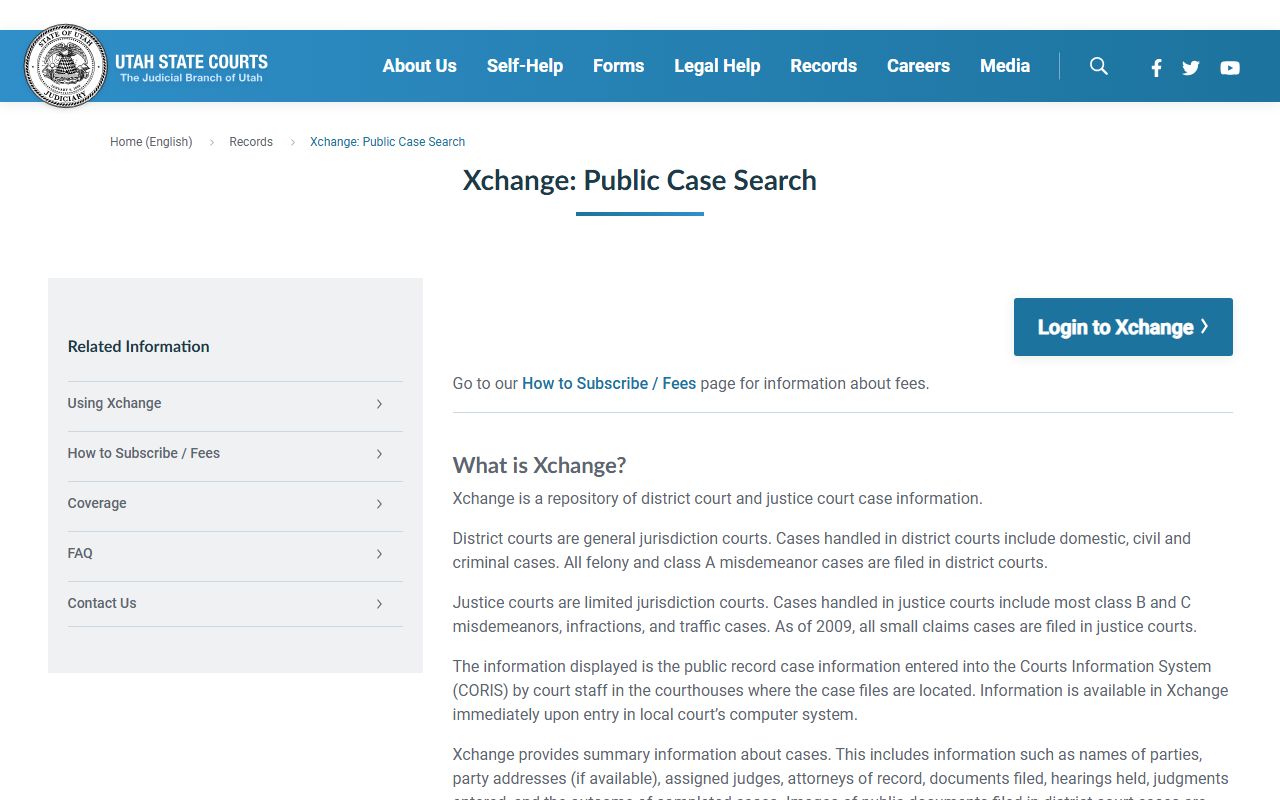
XChange remains the most thorough option for searching Utah court docket data remotely, with coverage across all district and justice courts in the state.
Utah Court Hearing Schedules and the Courts Calendar
Searching upcoming court hearings does not require a paid account. The Utah Courts Calendar is a completely free tool that shows scheduled hearing dates for courts across the state. No login is needed. The calendar updates daily and allows you to view schedules up to 30 days ahead. For courts that conduct remote hearings, the calendar includes WebEx links so participants can join by video or phone.
Once you open the calendar page, press Ctrl+F on your keyboard to search by name or case number. This makes it fast to find one case among dozens of scheduled matters. The calendar is most useful when you want to confirm a court date or check whether a specific hearing has been scheduled.
The link below connects to the free public hearing schedule maintained by Utah Courts. The Utah Courts Calendar shows current hearing schedules across the state without any login or payment.
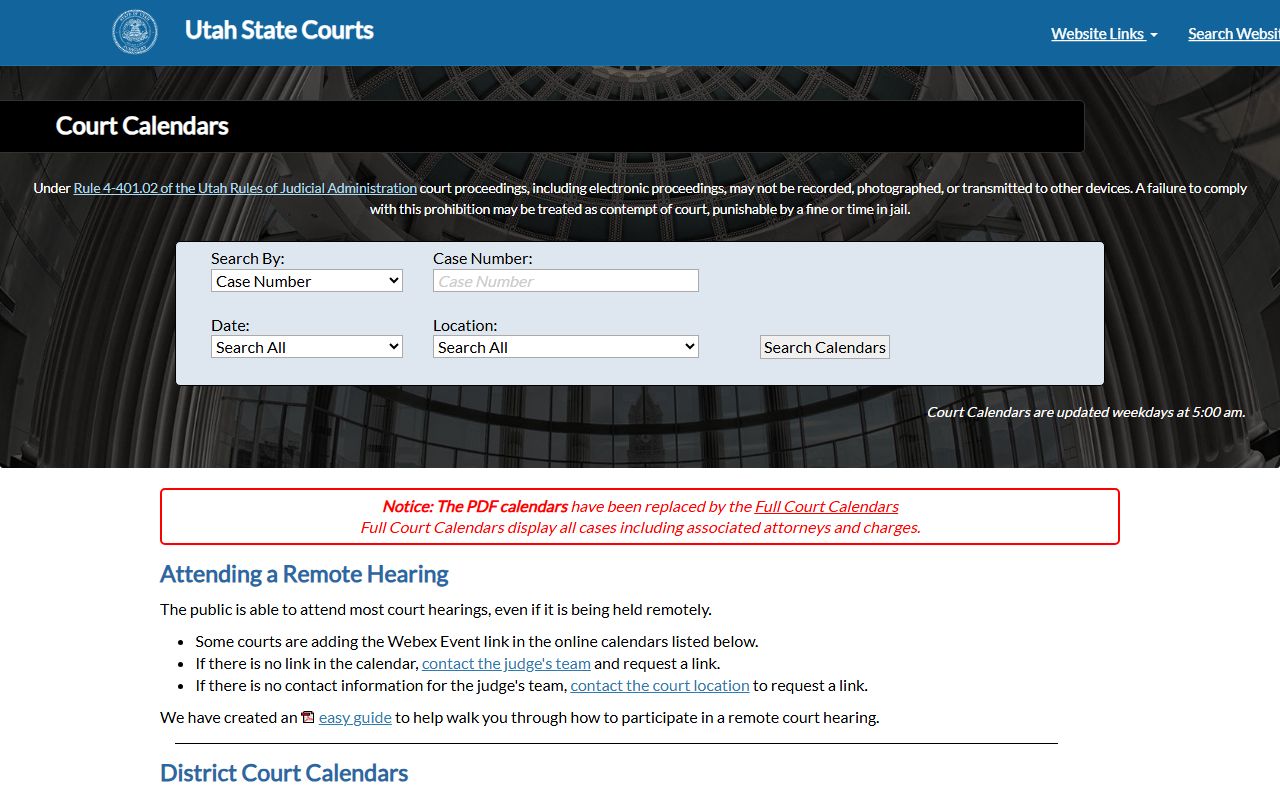
The calendar is a quick, no-cost way to confirm upcoming court dates before spending time or money on a full docket search through XChange.
Note: The Utah Courts Calendar shows scheduled hearings only and does not include full case docket history or document filings from past proceedings.
MyCase Portal for Utah Court Docket Parties
If you are a party to a case in Utah, the MyCase portal gives you free access to your full case record. You can view documents filed in the case, upcoming hearing dates, and complete case history going back to the initial filing. MyCase also allows parties to file documents electronically in certain case types. Cases eligible for electronic filing through MyCase include debt collection, eviction, and small claims matters. This removes the need to travel to a courthouse to submit paperwork.
The MyCase portal from Utah Courts sends text or email notifications when new activity occurs on your docket. You receive an alert when a document is filed, a hearing is added, or a judgment is entered. This is useful for self-represented litigants who need to stay informed without checking in repeatedly.
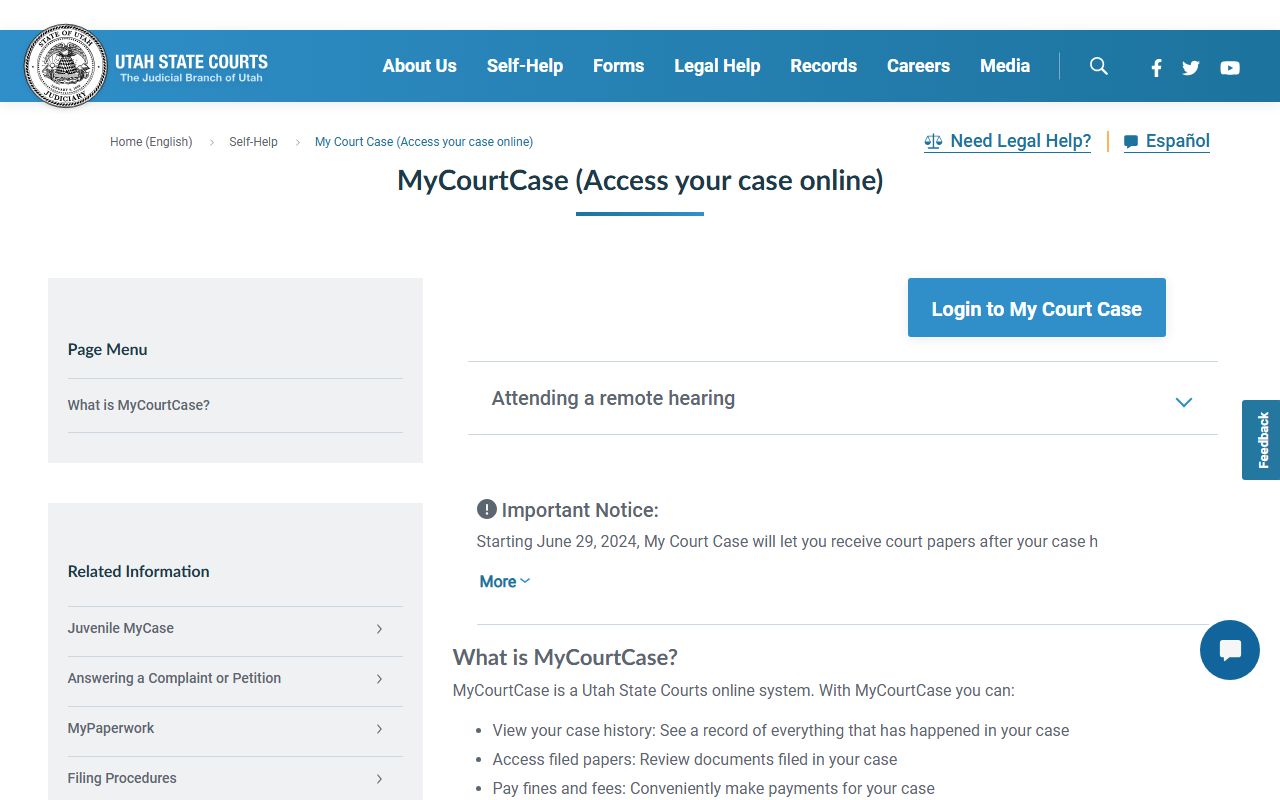
MyCase is a practical tool for anyone involved in a Utah court case who wants real-time updates without paying for XChange access.
Utah GRAMA and Court Docket Record Rights
Utah court docket records are governed by the Government Records Access and Management Act, known as GRAMA. This law appears at Utah Code Title 63G, Chapter 2. Under GRAMA, records held by government bodies are presumed public unless a specific statute says otherwise. Court records that fall under this public presumption include civil filings, criminal case files after charges are filed, hearing schedules, docket entries, and court judgments.
Section 63G-2-201 states that a person has the right to inspect a public record free of charge. You may visit any courthouse and ask to view a case file at no cost. Copies carry fees. Standard copies run $0.25 per page. Certified copies cost between $4 and $8 per document. Staff research time is billed at $20 per hour, with the first 15 minutes provided at no cost. These rules apply to all Utah court clerks receiving record requests under GRAMA.
The statute text below defines the legal framework for public access to Utah court records. Reviewing the GRAMA statute at Utah Code 63G-2 helps you understand what records the courts must provide and how to submit a proper written request if an in-person visit is not possible.
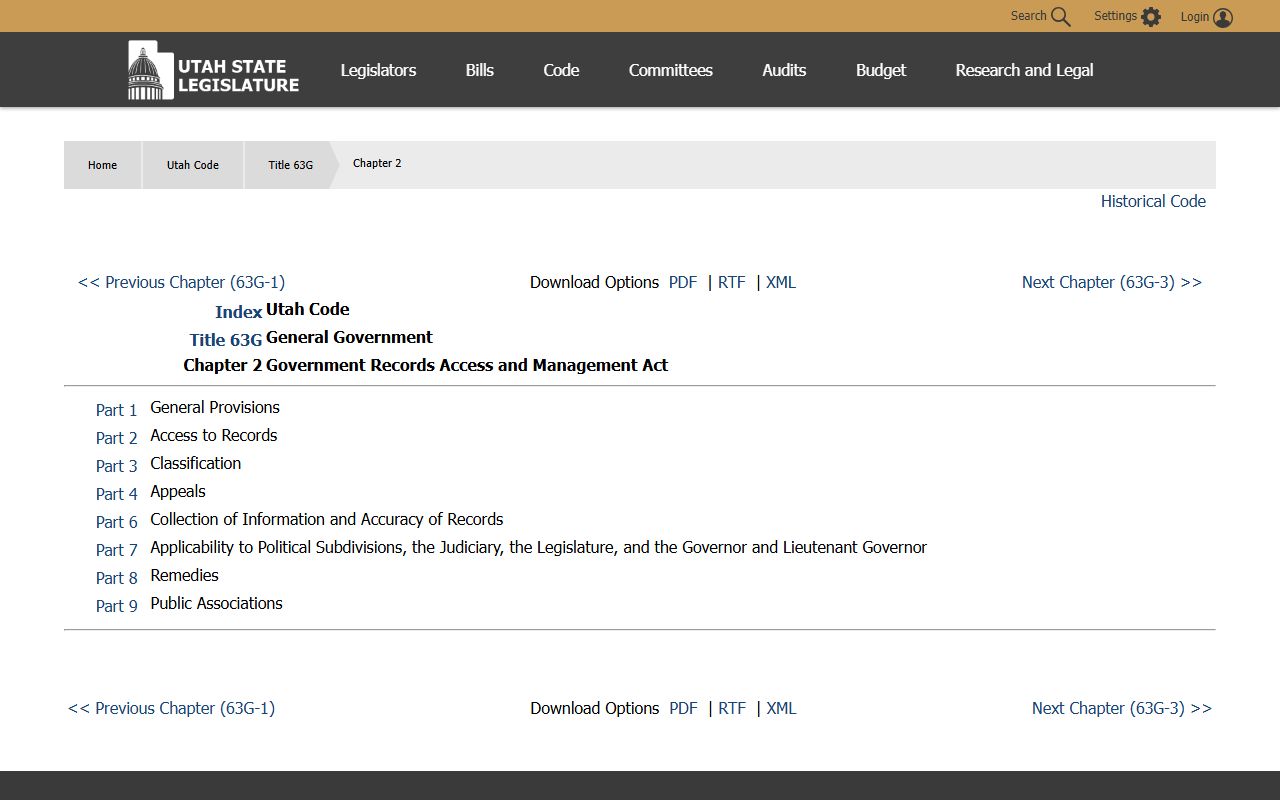
GRAMA gives every Utah resident a clear legal basis to request court docket records, regardless of whether those records are available through XChange.
Utah Court System and Judicial Districts
Utah has 8 judicial districts that cover all 29 counties. District courts handle general jurisdiction matters. These include felony criminal cases, civil disputes over $11,000, domestic relations matters, and probate proceedings. Justice courts handle Class B and C misdemeanors, infractions, traffic violations, and small claims cases. Both court types generate docket records that are publicly accessible through the tools described in this guide.
Utah also maintains two appellate courts. The Utah Supreme Court is the highest court in the state and hears appeals from the Court of Appeals and certain cases directly from district courts. The Utah Court of Appeals handles intermediate appeals from district courts. Appellate docket records are separate from trial court records and follow their own access procedures.
Knowing which district covers a given county helps you locate the right court when submitting a records request or visiting a courthouse in person. Here is a breakdown of the 8 judicial districts and the counties each serves:
- 1st District: Box Elder, Cache, Rich (Brigham City and Logan area courts)
- 2nd District: Davis, Morgan, Weber (Farmington and Ogden area courts)
- 3rd District: Salt Lake, Summit, Tooele (Salt Lake City, Park City, and Tooele courts)
- 4th District: Juab, Millard, Utah, Wasatch (Provo area courts)
- 5th District: Beaver, Iron, Washington (Beaver, Cedar City, and St. George courts)
- 6th District: Garfield, Kane, Piute, Sanpete, Sevier, Wayne (Richfield area courts)
- 7th District: Carbon, Emery, Grand, San Juan (Price, Castle Dale, Moab, and Monticello courts)
- 8th District: Daggett, Duchesne, Uintah (Manila, Duchesne, and Vernal area courts)
Note: Confirming the correct judicial district for a county saves time when requesting court docket records in person or by mail.
Historical Utah Court Dockets at the State Archives
For older case records, the Utah State Archives holds court files transferred from active courts once those records reach a certain age. Records more than 50 years old are typically moved from the originating court to the archives for permanent storage. The archives holds materials dating back to Utah's territorial period in the 1850s, making it the right resource for historical case research that predates the XChange database.
The archives is located at 346 South Rio Grande Street, Salt Lake City, UT 84101. Phone is 801-531-3843. Research hours run Monday through Friday, 9 AM to 4 PM. Staff can help identify which court series holds the records you need. Researchers can visit in person or submit written requests for records not yet digitized.
The link below connects to the court records research page at the Utah State Archives. The Utah State Archives court records page explains what historical court docket materials are held there and how to submit a request for access.
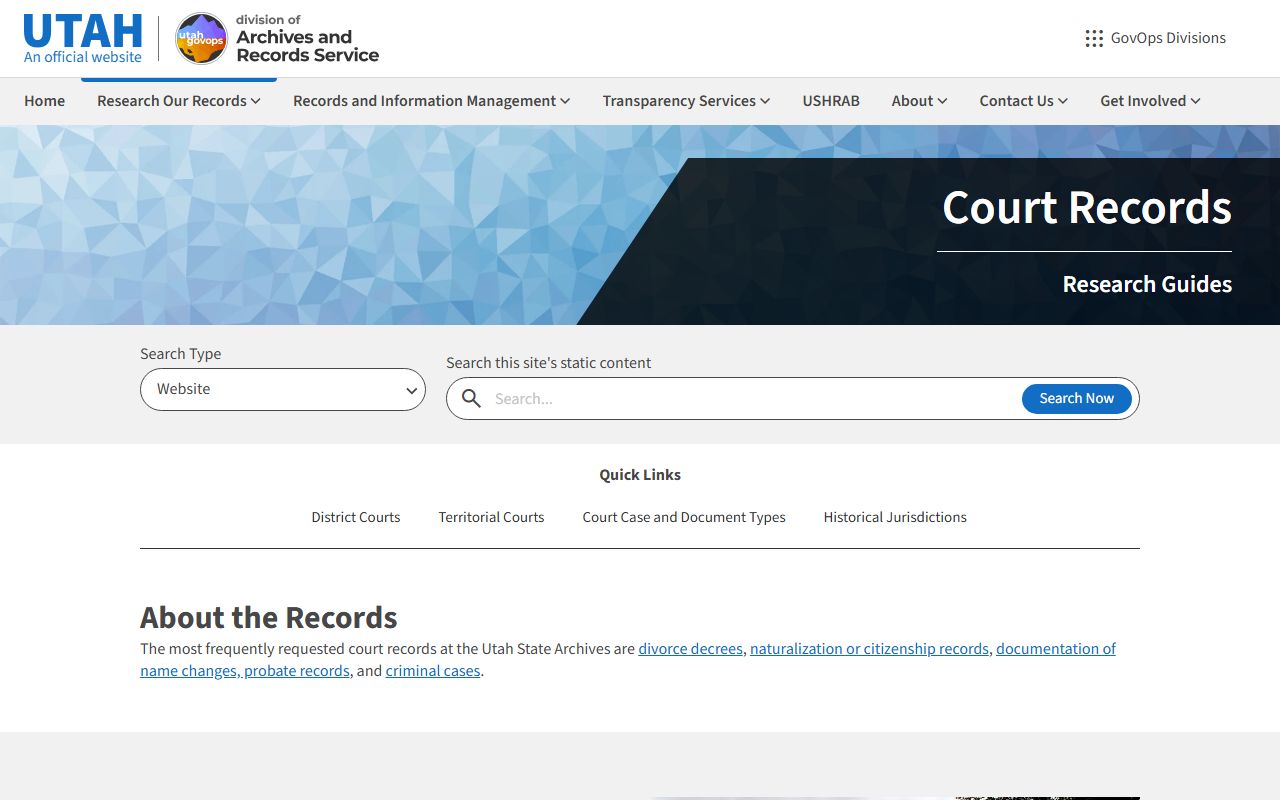
If the case you are researching is older than the XChange system covers, or involves sealed records transferred to long-term storage, the State Archives is the correct place to begin.
Utah Courts Self-Help Center and Court Forms
The Utah Courts Self-Help Center provides free resources for self-represented parties navigating the court system. This includes plain-language guides on how to read a court docket entry, how to file documents correctly, and what to expect at each stage of a case. The Online Court Assistance Program, known as OCAP, helps users draft court documents step by step without needing to hire an attorney. OCAP is built into the Utah Courts website and generates properly formatted documents once you answer a series of guided questions.
The Utah Courts Self-Help Center can be reached by phone at 888-683-0009. Staff answer general questions about court processes, though they do not provide legal advice. For more complex legal issues, the Self-Help Center can direct you to legal aid organizations across the state.
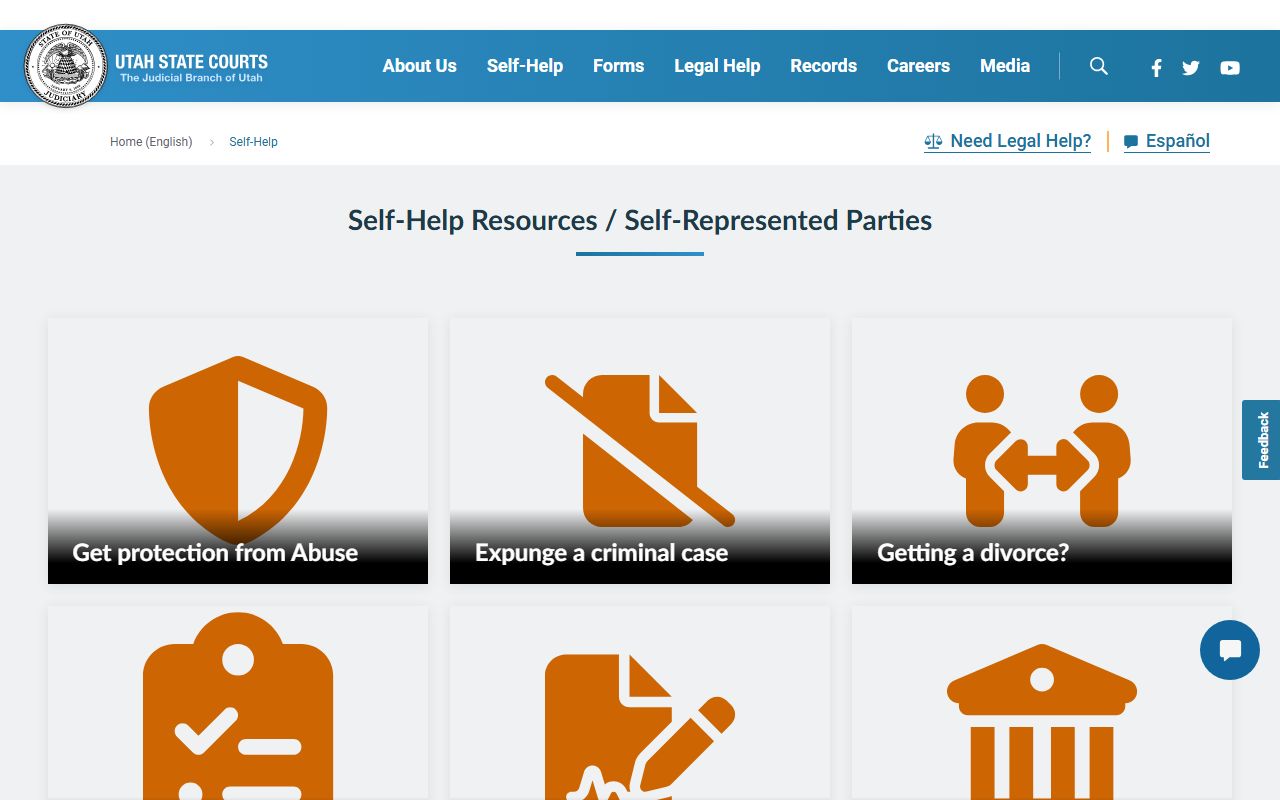
Whether you need to understand a docket entry, respond to a filing, or learn how hearings work, the Self-Help Center is a practical first stop before seeking paid legal counsel.
The Utah Courts Forms Repository is a companion resource to the Self-Help Center. All official court forms for every Utah case type are available there at no cost. The Utah Courts Forms Repository lets you download, complete, and print forms for filing in any Utah court. Using the correct form for your case type ensures your filing is accepted by the clerk and properly entered on the court docket.
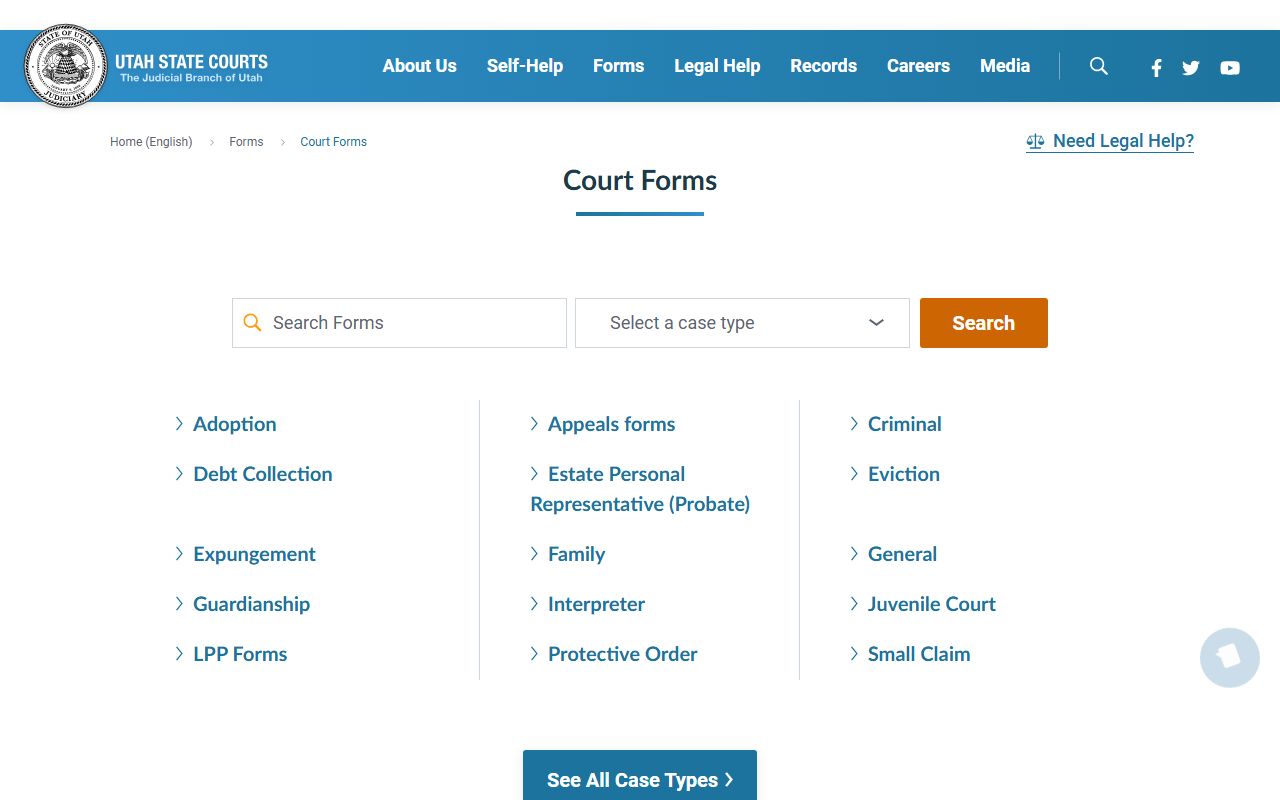
Having the right form ready before you visit the courthouse reduces delays and helps ensure your case record starts on the right footing.
XChange Fee Changes and Utah Court Record Access Costs
The cost to search Utah court dockets through XChange changed on July 1, 2025. Before the fee change took effect, KSL TV reported on the upcoming increase and what users could expect. Under the current fee structure, opening a standard account costs $25 and a guest account costs $10. Each search run through the system costs $0.35. Downloading a document costs $1.00 per file. A monthly subscription gives you up to 500 searches for a flat $40 fee.
A KSL TV report on rising Utah court record access fees covered the XChange price increases ahead of their July 2025 effective date, providing context on why the courts adjusted pricing and what the changes meant for regular users of the docket search system.
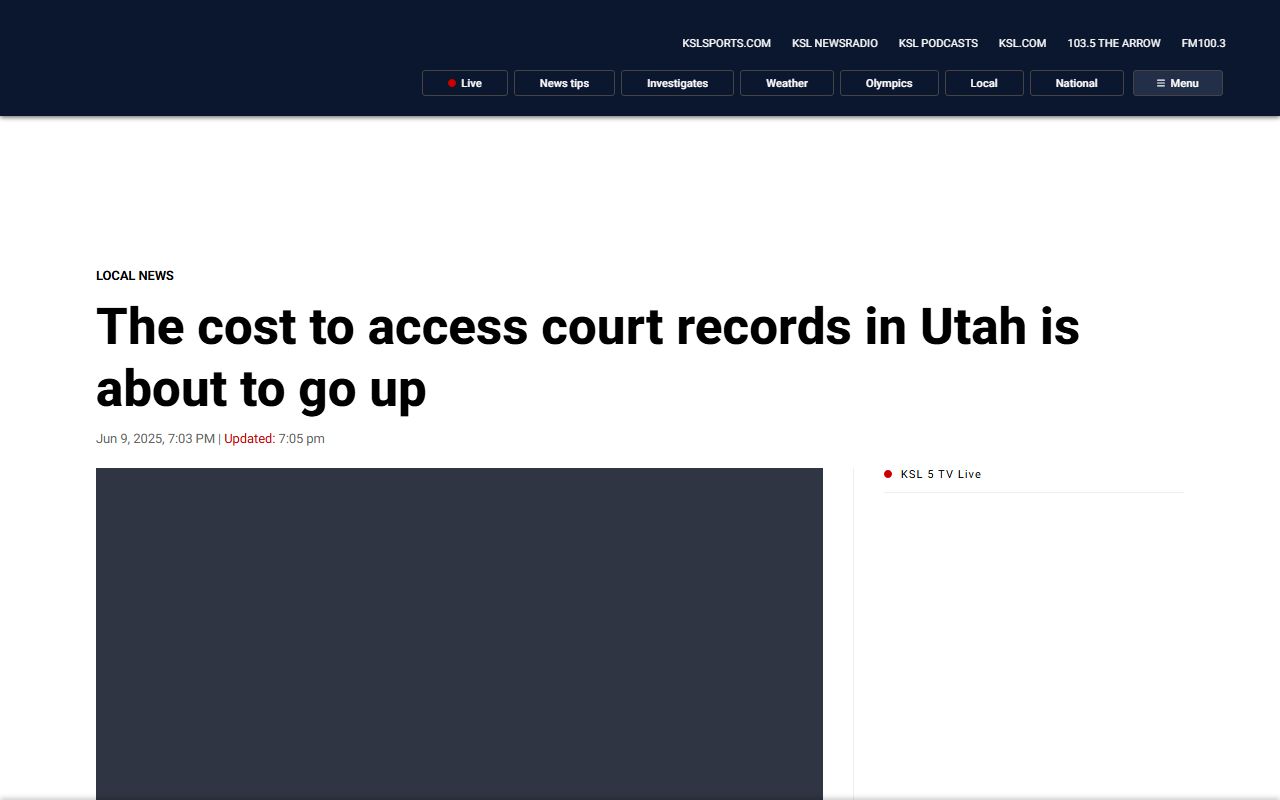
If fee costs are a barrier, remember that in-person access at courthouse public terminals and at the Utah State Law Library remains free regardless of XChange pricing changes.
Utah Warrant Search and Court Docket Records
Open warrants in Utah are tracked through the Statewide Warrants file, called the SWW. This database holds real-time warrant data from participating courts across the state. You can search by first and last name using the Utah Statewide Warrants search tool. Results show whether an active warrant is on file for the person you searched.
A warrant record is part of court docket activity. Warrants are issued through criminal case proceedings and entered into the court record when a judge signs the order. Searching the SWW shows only whether an active warrant exists. For full case details, including charges, hearing history, and case dispositions, use XChange or visit the clerk at the district court that issued the warrant.
Note: The SWW reflects data from participating courts only and may not include warrants from every justice court in Utah.
Browse Utah Court Dockets by County
Each of Utah's 29 counties maintains court dockets through district and justice courts. Select a county below to find local court contact details, courthouse addresses, and access options for court docket records in that area.
Utah Court Dockets by City
Justice courts in Utah cities handle most traffic violations, Class B and C misdemeanors, and small claims cases. Select a city to find local justice court information and how to search court dockets in that area.